 VapeWholesaleHub
Lost Mary MO5000 Market Demand: Reading the Numbers — Highly Regulated Markets
This page is written for the person who has to sign the purchase order, not for the person who designed the packaging. If you are weighing up lost mary mo5000 right now, the sections below follow the order in which the real decisions tend to arrive.
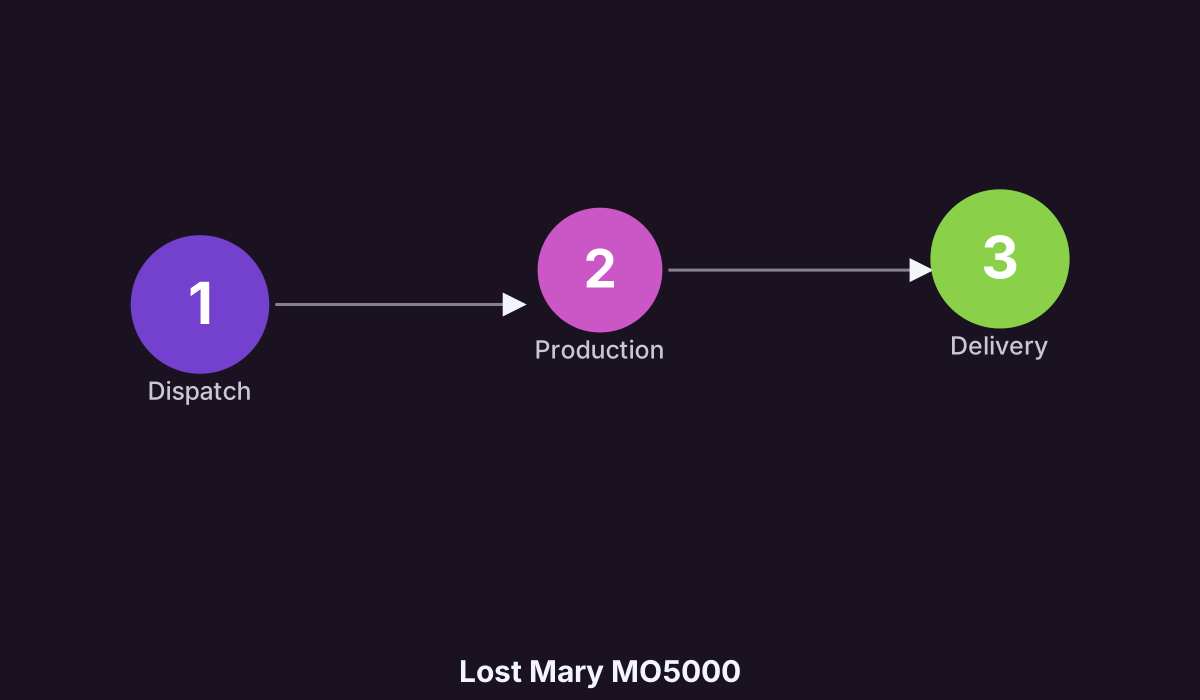
Where Lost Mary MO5000 Sits in the Range
Think about where lost mary mo5000 sits in your customer's week. If it is a weekly restock, breadth matters less than availability. If it is an occasional treat, flavour range and display story carry more weight.
Reading a Lost Mary MO5000 Spec Sheet
Two specifications that matter more than buyers expect: the seal integrity after a drop test and the consistency of the draw from first use to last. Both are measurable before you commit to volume.
| Product category | Refillable kit |
|---|---|
| Resistance band | 1.0 - 1.2 ohm |
| Capacity tolerance | +/- 3% |
| Puff count method | Declared by capacity |
| Master carton | 300 units |
| Carton weight | 11.7 kg |
| Shelf life | 12 months |
| Storage | 15-25 C, dry, away from direct light |
Selling Lost Mary MO5000 at Store Level
Use your lost mary mo5000 staff training time on the two questions customers actually ask. Anything more detailed gets forgotten by the second shift.
Freight, Customs and Timing
Carton dimensions for lost mary mo5000 are a design decision, not a packing afterthought. A few centimetres on the master carton can change how many units fit a pallet, and that repeats on every order.
Consolidating lost mary mo5000 with other lines is often the biggest single saving available to a mid size importer. The unit cost does not change but the landed cost does, sometimes materially.
Market Signals
Demand for lost mary mo5000 has been steadily rebalancing. The early phase rewarded whoever could ship fastest; the current phase rewards whoever can ship the same thing twice. That shift favours buyers who invest in specification rather than price shopping.
Practical Checklist
- Confirm the current customs classification with your own broker.
- Start with a mixed carton and let your own sell-through decide.
- Keep sealed retained samples from every production batch.
- Plan the switch from air to sea freight before you need it.
- Write the complaint threshold into the order terms.
- Ask how the factory measures puff count, then compare like with like.
Frequently Asked Questions
Can I visit the production facility?
Yes, and we encourage it for larger programmes. Visits are most useful when you already have a draft specification, because you can then check the specific processes behind the numbers you care about.
What happens if my market changes its rules?
Regulations move, and packaging or documentation sometimes has to follow. We keep approved artwork files on hand so that a required change is a reprint rather than a redesign, which keeps the cost and delay down.
Do you provide compliance documents?
Every shipment leaves with the documentation set relevant to your market, including batch records and test reports where required. Your local rules still determine what you must file, so confirm those with your broker before import.
Do you hold stock for regular customers?
For established programmes we can reserve production slots and, in some cases, hold finished lost mary mo5000 stock against a forecast. It removes most of the lead time risk from a reorder and is worth discussing once volumes are stable.
Next Step
Start smaller than feels comfortable, measure honestly, then scale what worked. That sequence has saved more of our customers money than any negotiation tactic we could suggest.
Related Reading
- Lost Mary MO5000 Communication Cadence With Overseas Suppliers — Plain Language
- Lost Mary MO5000 Forecasting Without Historical Data — Retail Chains
- Lost Mary MO5000 Humidity Control in Coastal Warehouses — Entry-Level Price Points
- Lost Mary MO5000 Inventory Turnover Benchmarks for Stores — Freight Included
- Lost Mary MO5000 Assortment Depth Versus Breadth — Specialist Vape Shops
- Lost Mary MO5000 Quality Control: Tests We Run Before Dispatch — Seasonal Demand Peaks